

Amazon FBA Expiration Date Requirements: Complete Seller’s Guide (2025 Update)
If you sell expirable products on Amazon, understanding FBA expiration date requirements can get tricky. Mess them up, and you risk stranded inventory, removals, account health issues—or even customer complaints. Get them right, and you’ll save yourself a lot of headaches (and unnecessary costs).
Here’s a clear guide to how expiration dates work on Amazon FBA, where sellers run into trouble, and how you can stay compliant.
When Does Amazon Require Expiration Dates?
Amazon requires expiration dates on any product that’s ingestible or topical.
That includes:
-
Food and beverages
-
Vitamins and supplements
-
Beauty and personal care items (like lotions or toothpaste)
The general rule: products must have at least 90 days of shelf life remaining plus the time it would normally take to use the product when they arrive at an FBA warehouse.
For example:
-
A two-month supply product must arrive at FBA at least five months before it expires.
-
A 90-day supply should not be sent in if it expires in only 60 days—you wouldn’t have enough time to use it.
How Do I Tell Amazon a Product is Expirable?
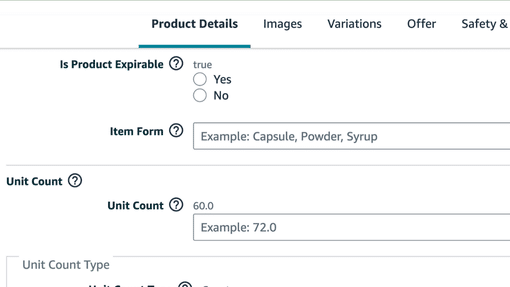
When you’re first creating a listing in Seller Central, you’ll see a field called “Is Product Expirable?”. Select “True” if it applies.
-
If you skip this or don’t see it, you can edit the listing later under Product Details or sometimes Safety & Compliance.
-
When creating a shipping plan, Amazon will require the expiration date for each case of inventory you send (all units in a case must share the same date).
-
Once entered, the expiration date will appear on the box labels Amazon generates. Customers won’t see these—Amazon uses them for warehouse tracking.
Preventing Customer Confusion with Expiration Dates
It’s not enough to have an expiration date—you also need to make sure no customer can misinterpret it. Even one misunderstanding can lead to complaints, returns, or negative account metrics.
Common pitfalls to avoid:
-
Ambiguous dates
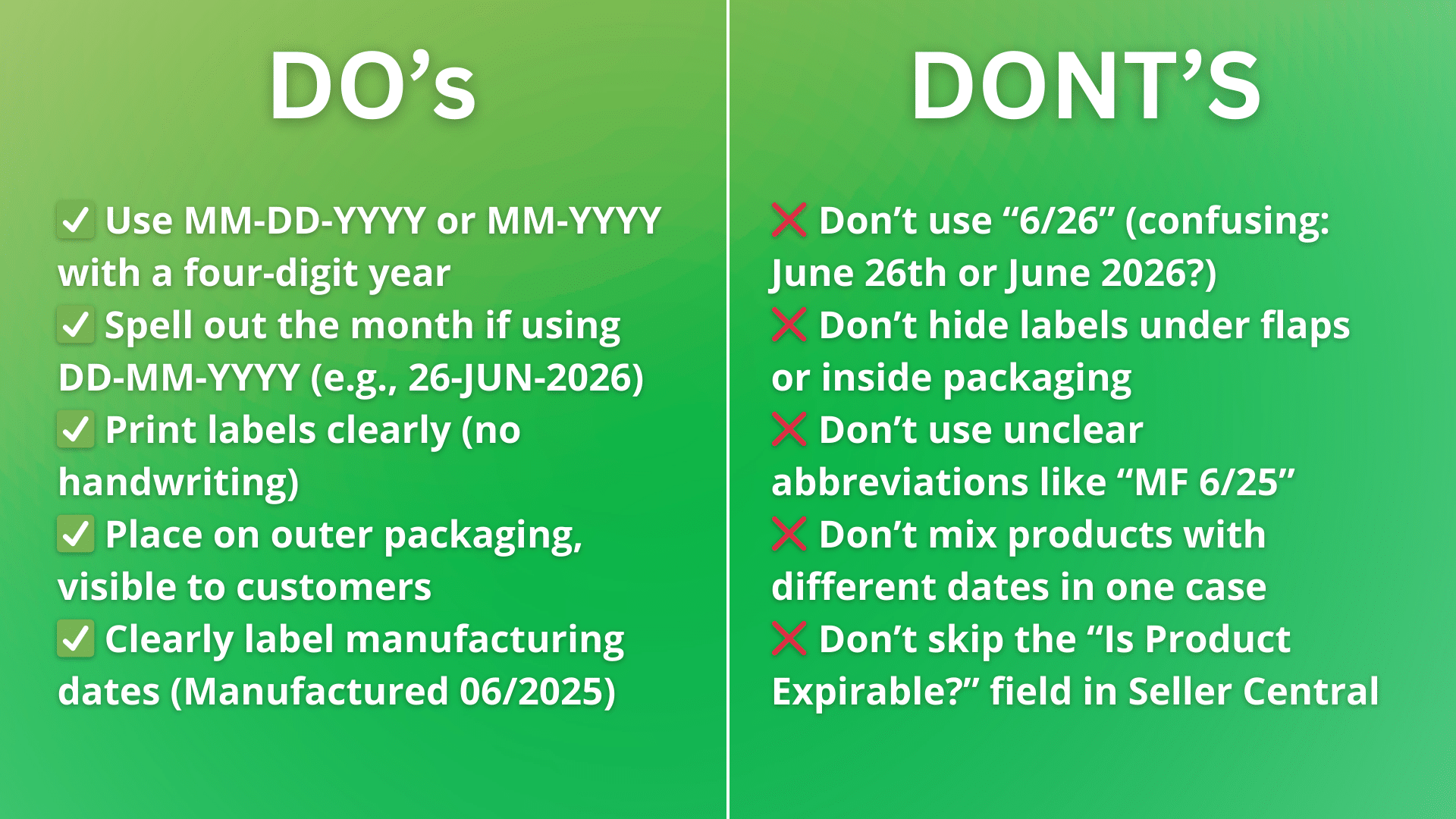
A label like “6/26” could mean June 26th or June 2026. Always use a four-digit year so there’s no room for error. -
Manufacturing dates
Labels like “MF 6/2025” often confuse customers. Most don’t know “MF” means “Manufactured.” They may think the product expired in 2025. If you include a manufacturing date, spell it out completely: “Manufactured 06/2025.” -
Expiration vs. Best By vs. Sell By
Amazon treats these terms as equivalent. Whether your product has an expiration date, a best-by date, or a sell-by date, Amazon will process them the same way.
The goal: out of thousands of customers, not a single one should be able to mistake your date format.
How to Label Expiration Dates for FBA Products
Amazon requires expiration dates to be clearly displayed:
-
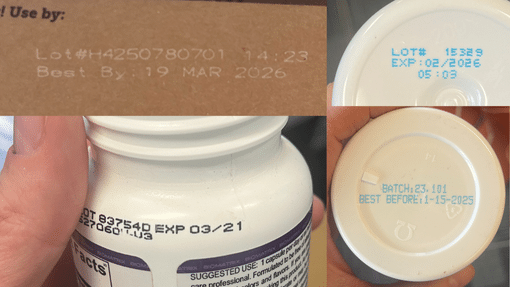
Use MM-DD-YYYY or MM-YYYY format.
-
You can also use DD-MM-YYYY, but in that case spell out or abbreviate the month name (e.g., “26-JUN-2026”) so customers aren’t confused.
-
Always use a four-digit year.
-
Labels must be clear, printed, and easy to read (no handwriting).
-
Place the label on the outer packaging where it’s visible.
-
“Best By” and “Sell By” dates are considered equivalent to expiration dates.
- Lot #'s are common for your own logitical purposes but are not required for Amazon.
Common Expiration Date Problems on Amazon FBA
Even if you follow the rules, issues can pop up:
-
Amazon won’t let you input a date when creating a shipment
Check that you marked the product as expirable in the listing (Product Details or Safety & Compliance). If needed, you can also update via Excel template. In some cases, as long as the inventory itself is labeled correctly, you can still send it in. -
Inventory gets flagged as expired before it really is
This happens more often than you’d think. Create a case with Seller Support, ask them to double-check, and request photos. If it’s an error, they’ll usually reclassify it as “available.” (A few units truly expiring here and there is normal, since Amazon doesn’t always sell inventory in the exact order received.) -
Amazon disposes of units too close to the cutoff
To prevent this:-
Send inventory well before expiration.
-
Monitor sell-through so products don’t sit idle.
-
Check your FBA settings → Unfulfillable inventory. Choose the option to have Amazon return units instead of automatically disposing of them.
-
Consequences of Ignoring Expiration Date Rules
Here’s what can happen if you don’t stay on top of this:
-
Inventory disposal – Noncompliant inventory won’t be sold, and once flagged expired, it’s gone.
-
Customer complaints – Even one misunderstanding can lead to negative reviews. If several customers complain, Amazon may suspend the listing until you fix the issue (often requiring recalls, relabeling, and resending).
-
Account health risks – Expired product complaints count heavily against you and can put your entire account at risk.
Bottom line: ignoring expiration date rules costs money—and sometimes your selling privileges.
Tips to Stay Compliant With Amazon’s Expiration Date Policy
To avoid headaches:
-
Double-check expiration labels before shipping to FBA.
-
Always use four-digit years.
-
Track shelf life in your own system.
-
Ship products well before the 90-day cutoff.
-
Use a prep service if you’re unsure about labeling.
A little preparation now saves a lot of wasted inventory later.
Does Amazon FBA accept products with less than 90 days before expiration?
No. Anything with fewer than 90 days remaining will likely be disposed of. But remember that's just the minimum. It also needs to be able to be sold and used before the 90 days before expiration start.
How do I correctly label an expiration date for Amazon FBA?
Use MM-DD-YYYY or MM-YYYY with a four-digit year, printed clearly on the outer packaging. If using DD-MM-YYYY, spell out the month name to avoid confusion.
Can I sell products with a manufactured date instead of an expiration date?
Yes, if the product doesn’t expire. Just be clear that it’s a “Manufactured Date” to avoid confusion. Including a manufacturing date in addition to an expiration date is also fine.
Are “Best By” and “Sell By” dates treated differently than expiration dates?
No. Amazon treats all of them the same. They are interchangeable as far as Amazon is concerned.
What if we’re not legally allowed to put an expiration date on our product yet (e.g., stability testing isn’t complete)?
Use a Best By or Sell By date instead. Amazon will treat it the same as an expiration date.
Expiration dates can feel like a small detail—but with Amazon, they matter a lot. Label them correctly, avoid customer confusion, and you’ll save yourself from removals, complaints, and wasted inventory.
If you want help navigating expiration date requirements (or compliance issues in general), that’s what we do every day. At Five Star Commerce, we help over 450 brands each year grow on Amazon while staying out of trouble.
👉 Talk to our team today to keep your Amazon business running smoothly.